Thursday, June 28, 2018

Understanding Autoimmunity


Understanding AutoImmunity


Dr Kyle Christensen DC May 2018

Recently I’ve had the opportunity to complete a course in autoimmune diseases.  It was a unique course in that it didn’t simply describe the variety autoimmune conditions but the emphasis was on teaching us how to correct, resolve and overcome them. An autoimmune condition is one in which the body begins to attack itself as though it were an infectious disease, necrotic (dead) tissue, or something foreign, rather than repairing itself as is the regular course of healing. When I was studying chiropractic in college over 30 years ago, there were only a handful of conditions that were considered autoimmune. We are now rapidly approaching over 200 conditions that are classified as autoimmune. 

Of course, we must ask the question – What is going on here?! We live in the most modern technologically advanced civilization in the history of the world and we keep getting sicker. Yes, we live longer, but not in better health. It is a sad commentary that the United States comprises of only 4.4% of the worlds population, yet we consume over 75% of the prescribed drugs.  Youch!

Here are a few major concepts that I have learn:

ALL DISEASE EVENTUALLY BECOME AUTOIMMUNE
·      Low-level chronic infections lead to autoimmunity
·      Weak immune system leads to autoimmunity
·      Necrosis (damaged, destroyed, dead tissue) leads to autoimmunity
·      Drugs do not address autoimmune issues
·      Chronic infections need to be dealt with in all autoimmunity

As follows is a common cascade of events that can eventually result in an autoimmune condition:
Can you find yourself somewhere on this continuum?
It can begin with some sort of assault:
o   Infectious Exposure (from human, animal, mosquito or tic carrying a pathogen),
o   Toxicity – from repeated exposure to toxic foods, water, pesticides, drugs, etc. or as a result of exposure during fetal development
o   from childhood Vaccinations (because of adjuvants such as aluminum and toxins such as mercury)
The stress and strain of this can depress the immune system and lead to Acute infectious illness (earaches, bladder infection, bronchial infection, etc.) which are far too often treated with Antibiotics which,
Wipes out the Gut Flora (both the probiotics =good and bad-biotics =bad), which
Damage the lining the Intestinal Tract, which can
Leads to a Leaky Gut (with symptoms of indigestion, reflux, gas, constipation and/or diarrhea) causing increased permeability (absorption) of incompletely digested foods, which
Causes Antibody Responses and Allergies, which further weaken, compromise and depress the Immune System, which
Can allow Pathogens (harmful virus, bacteria, fungus, etc.) to proliferate (usually in the weakest organ, gland or tissue – weakened through injury, toxicity or a genetic predisposition)
These pathogens can be very highly intelligent or sneaky and shroud themselves disguised as normal tissue (called Stealth Pathogens) allowing them to slip under the surveillance radar of the immune systems scrutinizing watch, which
Results in Low-Level Chronic Infections (a lingering illness that just doesn’t get better as ALL infectious illnesses should), which can lead to
An antibody response (or the immune system identifying healthy organs, glands or tissue as a foreign invaders that must be attacked and defeated) resulting in dysfunction, pain and inflammation, which
by definition is Autoimmunity. An autoimmune disease or illness is identified or labeled by what part of the body is being attacked. The thyroid gland = hypothyroidism, nerves = multiple sclerosis, many varied problems with Lyme Disease, Chronic Fatigue/muscles = fibromyalgia.

Whew! Did you follow that? You can enter this scenario at any level but
With multiple infections/illnesses, many undergo repeated antibiotic use, which accelerates the spiral toward autoimmunity. This is often compounded with a poor diet, poor sleep and chronic stress.


The medical approach is often to figure out what is the offending pathogen – Borrelia in Lyme disease, H. Pylori in the stomach, Epstein Barr in the nervous system, etc.  and then drugs, often antibiotics are prescribed to kill the offending microbe or manage the symptoms.  Sounds reasonable, but it doesn’t really work. It doesn’t work because the framework of the immune system is broken. The digestive tract is compromised which controls or mediates 70% of your immune function. If the innate or primary immune system is damaged, there is little hope of a lasting recovery. If the fish bowl is dirty and in need of being cleaned, it doesn’t make much sense to inoculate (vaccinate) the fish against disease and drop him back in the dirty bowl. We, like the gold fish, must enjoy a clean and health promoting environment if we expect to maintain our health.


This innate or primary immune system is the body’s inherent ability to keep us healthy.  It has been expressed that we do not have an immune system, but rather WE ARE AN IMMUNE SYSTEM. The medical approach of developing acquired immunity for specific diseases through vaccination has sadly proven to be a false notion. Current scientific research has discovered that our bodies are far more intelligent that previous assumed. Immune response cells actually have the ability to adapt in order to combat a multiplicity of pathogens rather than the “one antigen to one pathogen” response as previous taught in medicine.  We have also observed that pathogens (virus, bacteria, fungi, etc.) mutate and change, which is why flu vaccines are rarely effective because those wily infectious pathogens keep on changing.  It makes much more sense to heal and strengthen the immune system, which has the ability to adapt to the ever-changing microbial environment. 

Our body’s immune system is designed to clean up problems that occur as a natural course of living. All cells have a predetermined life cycle. When a cell gets old and it is time for it to retire, the immune system goes to work and neatly packages up the cellular parts to either be recycled or carried away as waste. It truly is very clean and efficient.  However, if a cell dies as a result of being overwhelmed by infection or direct tissue damage (a severe injury – imagine direct blunt trauma), cells can be killed (called necrosis) and instead of the cells being neatly packaged and carried away, the cell spews it guts, cell wall, DNA and everything else everywhere. BLAM!  The internal clean up process involves “antibodies”. The following analogy can you us understand the role of antibodies in our immune system.


Imagine for a moment we are driving down the highway and as we drive by the prison we notice a man in a bright orange jumpsuit running as fast as he can through the field behind the prison. Humm, that doesn’t look right.  If we were an antibody, we would not jump out of our car and attempt to apprehend him, but rather as an antibody, we would pick up the phone, call 911 and alert them.  “Hey, I just thought you’d like to know, there’s some guy in an orange jumpsuit running through the field behind the prison”. This is what an antibody does – Alerts the immune system. It does not fight the battle, simply alerts the system. So that the immune system can rally its forces to fight the battle. 

Antibodies are a good thing.  Because if for example a liver cell somehow gets dislodged and floats through the blood stream and ends up in the bone marrow, the antibody will alert the immune system saying in essence “Hey! You don’t belong here. I’m telling the immune system to come and take care of you.”  This mechanism keeps things in good order.

However, when our bodies are damaged or compromised through infection or necrosis (damaged tissue that dies), the immune system can become overwhelmed resulting in antibodies being created to clean things up.  With cellular DNA being strewn all over the place (cells killed by infection or direct damage), antibodies may now tell the immune system to attack all muscle cells because it is working so valiantly to clean up that specific tissue that is not where it belongs.  As a result, the immune system is not only cleaning up the tissue in the wrong place, but also that same tissue right where it belongs. This in essence is an autoimmune response.  The body attacking cells because of misinformation by the antibodies, which have become hyper-alert due to infection or necrosis.


Here’s a brief analogy to help you understand the relationship of your immune system and pathogens.
The mosquito does not create the stagnant water. The mosquito is opportunistic and finds stagnant water to proliferate. Likewise, pathogens do not create damaged or necrotic tissue, they are opportunistic and take advantage of diseased or damaged tissue. In other words a healthy immune system is resistant to pathogen overgrowth, while a damaged, stressed or compromised immune system can allow the cascading effects that may lead down dangerous places.  This explains why some get sick if exposed to illness and others do not. It is integrity of the immune system rather than being exposed or just dumb luck.

An advantage of living in our time and day is that we can each learn from the wisdom and experience of those who have gone before us.  I am so blessed to have been taught by brilliant and compassionate men and women whose lives have been and are dedicated to ferreting out and applying the truth regardless of where is originates. We do not eschew (deliberately avoid) medicine or its discoveries, but we learn from them, understanding that knowledge is obtained often by making incorrect assumptions but have the humility and courage to learn and grow, if the goal is to truly help mankind, rather than financially profit from illness and misery.  Sadly, we live in a time where greed, control and power can overrule  compassion and common sense.

I have observed that a patient with an autoimmune condition that always has major digestive issues. Additionally, I have learned that we cannot have chronic or long-term issues without significant emotional issues that come as a result of it and perhaps even preceded your illness. Diet, sleep, positive relationship and other aspects of a healthy lifestyle must also be addressed. For many of you, you have done this already, but are still sick and suffering.  My point is: Regaining your health in your case may not be a simple straightforward process. It can be very tricky. Autoimmunity must be addressed from multiple perspectives and approaches in order for a successful outcome.

The key to recovery from autoimmunity is to heal the digestive system, immune systems, kill the stealthy pathogens and heal the damaged tissues, which have fallen prey to your illness (as best we can). Then of course, prevention of future problems is insured by a healthy lifestyle.

People can and do get well from these seemingly hopeless conditions. Through my course of study and practice, we have developed several protocols that can help those suffering from one or more of the myriad of autoimmune conditions. 

If this seems like something you or a loved one may be dealing with, give us a call. We just may be able to provide answers and help.

Blessings,

Dr Kyle Christensen
May 2018


AutoImmune Recovery Protocols
Dr Kyle Christensen May 2018

The key to recovery from autoimmunity is to rebuild the immune systems, kill the stealthy pathogens, heal the digestive system, and restore the damaged tissues (as best we can). Then of course, prevention of future problems is insured by a healthy lifestyle. 

We recommend several options for recovery. The first is using products from Standard Process. We hardily endorse these great products and thousands have found success with these products and protocols. Secondly, for those who would like, we also offer herbal remedies that can be made on your own that will replace some of the MediHerb products (the herbal line from Standard Process). When making your own remedies from formulas we have developed, you can save money as well as create quantities sufficient for yourself and those you seek to care for.

Of course, a healthy diet, adequate sleep and relaxation, moderate exercise, keeping well hydrated, and allergy elimination treatments (if needed) are important. Your emotional and spiritual health cannot be overlooked. We have tools and guidelines that can help. Understand we are not interested in a quick and shallow fix that will only temporarily ease symptoms. The goal is true health. True recovery will take effort and some changes.  Much of what you have done is right on target. Here we give you a systematic program that can make the decisive difference.

 We are here for you to answer you questions and concerns. To guide you and help motivate you.

Blessings,

Dr Kyle Christensen


Rebuilding the Immune System
This is the first key in your recovery. If you don’t feel well and haven’t for a while, you need to start here. Many suffer from chronic low-level infections. Having a healthy and robust immune system is vital to your recovery.
Plan for 2-3 months for rebuilding the immune system (usually feeling better in 3-4 weeks)

Standard Process Protocol
1.     Echinacea Premium 2-3/day
2.     Rehmannia Complex 3-4/day
3.     Immuplex 3-6/day
4.     Three Kings (Gold/Frankincense & Myrrh) 6 capsules/day 
5.     PMG (protomorphogen – the protein of the DNA found within the nucleus of the cell – each cell type having a different protomorphogen) – use the one where they have symptoms
Work up to taking 6 per day
Take on empty (30 minutes before eating or 2 hours after eating)
Additional you can add for a quicker, better result
6.     Vitanox 1-2/day
7.     Calcium Lactate 1 tsp-1 Tbs/day
8.     Standard Process – Daily Fundementals Packets (1 packet morning and 1 packet evening containing: 3 Catalyn, 1Trace Mineral-B12, 2 Tuna Omega-3 oil)

Why take a Protomorphogen
Protomorphogens (pro-toe-more-fo-gen) or PMG supplements manufactured by Standard Process that will help your organ/gland or tissue that may be having a problem as result of autoimmunity. Protomorphogens are the protein from the DNA of the cells. Protomorphogens tie up the negative antibodies and calls off the immune attack of the organ, gland or tissue. PMG buys time for the body to heal by diverting the antibodies away from the tissue so it can heal. PMG calms down the autoimmune response to that tissue. PMG are made from and are for specific organs, glands or tissues.

Four Functions of Protomorphogens (PMG)
1. Acts as a Decoy: The immune system Antibodies attacks the PMG in the digestive tract instead of the organ or gland
2. Oral Tolerance/desensitization/tolerization: Consuming an antigen (the PMG) orally makes the immune system less aggressive against itself.
3. A Rich source of mircoRNA, which help regulate gene expression in all cells while helping to rebuild healthy DNA.
4. Nutrition: protein & trace minerals in the PMG provide nutritional building block to restore and rebuild damaged or compromised organs, glands and tissues.

Protocol for taking a Protomorphogen
PMG’s are best taken on an empty stomach - 30 min before eating or 2 hours after eating/before bed
Build up your dosage of PMG over a week
Take 1 tablet morning, then 1 evening for 2 days
Take 2 tablets morning, 2 evening for 3-4 days
then 3 in the morning, 3 evening
If you have any reaction (histamine response – runny nose, feeling achy) this is actually a positive response letting you know we have found the correct area to work on because the immune system is reacting to the protomorphogen. You may need to back off the amount of PMG or take it with food to minimize the reaction. Occasionally some need and can only take small doses at first. Again, if you experience a reaction – you are definitely on the right track – you just need to proceed more slowly.
Dr Kyle Christensen 2018

Dr Christensen’s Herbal Remedy Alternatives for Rebuilding the Immune System
Many of you, like myself, are always looking for ways you can do something yourself and by doing so save some money. By making your own powerful, potent, fast and effective remedies, you will gain greater insight and understanding of these remedies as well as make plenty of formula for yourself and your recovery.

1.     Replace MediHerb Echinacea Premium with Dr Christensen’s Immune Syrup (Echinacea Angustifolia, Echinacea purpurea, Cat’s Claw, Pau d’Arco, Eleuthero, Cinnamon)
2.     Replace MediHerb’s Rheumannia 3-4/day or Dr Christensen’s Rehmannia Plus (Rehmannia, Bupleurum, Feverfew, Sarsaparilla)
3.     Standard Process Immuplex 3-6/day
4.     Three Kings (Gold/Frankincense & Myrrh) 6 capsules/day 
5.     Standard Process PMG (protomorphogen – the protein of the DNA found within the nucleus of the cell – each cell type having a different protomorphogen) – use the one where they have symptoms (Adrenals, Thyroid, Pancreas, Muscles, Bones, etc.)
For an even better response, we recommend adding
6.     Replace MediHerb’s Vitanox 1-2/day or Dr Christensen’s Rosemary Formula (Rosemary, Green Tea, Turmeric, Cacao)
7.     Standard Process – Daily Fundementals Packets (1 packet morning and 1 packet evening containing: 3 Catalyn, 1Trace Mineral-B12, 2 Tuna Omega-3 oil)


Clearing Chronic Infections -Stealth Pathogen Protocol
Once your immune system has been aroused and you are feeling somewhat better (typically 3 to 4 weeks into the Immune building phase, you may begin clearing chronic infections. These are often referred to as stealth pathogens, which are harmful virus, bacteria, yeast, mold, etc. that go undetected or only minimally detected by the immune system.
These formulae are designed to kill, eliminate and remove stealth pathogens. Repeat this 2 week protocol for 6-10 Cycles (3-5 months).

Standard Process Protocol
Part ONE: 1-4 days
1.     MediHerb Artemisisinin Complex, 3 bid
2.     MediHerb Myrrh Forte, 4 bid
Part TWO: 5-14 days
1.     MediHerb Viranon, 1 tid
2.     MediHerb Echinacea Premium, 1 tid

Dr Christensen Remedies for Clearing Chronic Infections
Part ONE: 1-4 days
Replace Artemisisinin Complex, 3 bid with Dr Christensen’s Sweet Annie/Myrrh Complex (Artemisia annua, Myrrh, Sarsaparilla) – take ¼ to ½ tsp 3 times daily
Part TWO: 5-14 ays
Replace MediHerb Viranon with Dr Christensen’s  Stealth Pathogen Formula (Thuja, Lomatium, St John’s Wort, Licorice root) ½ tsp 3 times daily
Replace Echinacea Premium with Dr Christensen Immune Syrup ½ tsp 3 times daily


Gut Flora Restoration and Healing a Leaky Gut Program
Weed, Seed & Feed for 10-12 weeks
Standard Process Formulas
2 days Sat/Sunday Weeding:
·      MediHerb Gut Flora Complex 2 bid
·      MediHerb Garlic Forte 2 bid

5 days M-F Seeding & Feeding (Do both the Seed and Feed simultaneously)
·      Standard Process Lact-Enz 2-3 bid and/or ProSynbiotic 2 bid
·      Cyruta Plus 6-9 = 2 tablets 3 times daily – Cyruta heals and seals
·      Sauerkraut, KimChi, Kombucha, Kefir, etc. daily
·      Standard Process Lactic Acid Yeast 3 bid
·      Standard Process Prebiotic Inulin start with ½ bid, then increase by ½ tsp every 3 days. work up to 1 ½ tsp bid
·      Prebiotic Diet – Beans, flax seeds, bananas, berries, asparagus, greens, garlic, onions – non-digestible carbs that feed the probiotics.  When prebiotics and probitoics are combined, they work together to create a healthy environment inside the gut while promoting proper digestion.
·      Vitanox 1 tid
Take Daily
·      Dermatrophin 2 or 3 3 times daily on empty stomach

Dr Christensen Remedies for Restoring the Gut Flora and Healing a Leaky Gut
2 days Sat/Sunday Weeding:
1.     Replace MediHerb Gut Flora Complex with Dr Christensen’s Bitter/Sweet Formula ½ tsp twice daily
2.     Replace MediHerb Garlic Forte with  Dr Christensen’s Garden Tonic ½ tsp twice daily

5 days M-F Seeding & Feeding (Do both the Seed and Feed simultaneously)
·      Standard Process Lact-Enz 2-3 bid and/or ProSynbiotic 2 bid
·      Cyruta Plus 6-9 = 2 tablets 3 times daily – Cyruta heals and seals
·      Sauerkraut, KimChi, Kombucha, Kefir, etc. daily
·      Standard Process Lactic Acid Yeast 3 bid
·      Standard Process Prebiotic Inulin start with ½ bid, then increase by ½ tsp every 3 days. work up to 1 ½ tsp bid
·      Prebiotic Diet – Beans, flax seeds, bananas, berries, asparagus, greens, garlic, onions – non-digestible carbs that feed the probiotics.  When prebiotics and probitoics are combined, they work together to create a healthy environment inside the gut while promoting proper digestion.
·      Vitanox 1 tid
Take Daily
·      Dermatrophin 2 or 3 3 times daily on empty stomach

Low-Inflammation Diet
Focus on nourishing yourself with a variety of nutrient-rich foods. 
·      Gradually increase your intake of fruits and vegetables (emphasize vegetables)
·      Include 2 to 3 servings of protein each day. (serving-size is about 3 oz /size of your palm)
·      Add Fermented foods such as sauerkraut, kimchi, kvass, kefir and kombucha.
·      Bone Broth
·      Use a variety of herbs and spices such as turmeric, cinnamon, rosemary, basil, ginger and oregano.
·      Avoid processed foods, fast foods and junk foods. Pre-packaged, prepared food are high on your alert list.
·      Limit dairy consumption (any dairy eaten should be fermented like yogurt, kefir, etc.)
·      Minimize foods high in unhealthy fats and carbohydrates
·      Whole grains such as brown rice, quinoa, millet
·      Bread should be whole grain organic, sourdough and made fresh
·      Eliminate all processed sugar consumption
Anti-Inflammatory Foods to emphasize


Blue berries
Raw Oats
Ginger
Green Tea
Dark Chocolate
Wild Salmon
Turmeric
Beets
Broccoli (cruciferous)


Black beans
EVOO – Extra Virgin Olive Oil
Tomatoes
Chia seeds
Pineapple
Spinach
Whole Grains (Quinoa, Brown Rice, Millet, Amaranth)
Eggs
Garlic


Thursday, January 11, 2018

Cooking Beans

5 Ways to Cook Beans to Perfection
Much of this was taken and adapted from:
Cooking Basic Beans in the Rancho Gordo Manner
                            

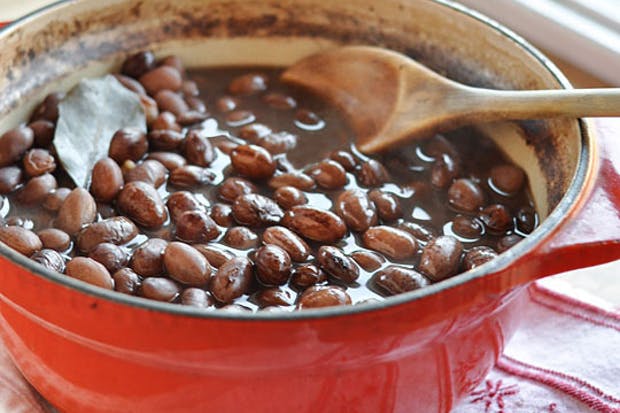
There is not one single method of cooking beans. At its most basic, you want to simmer in water the pot of beans until they are soft. Soaking can speed up the process and vegetables or stock will make them more flavorful. But it really is that simple. There's all kinds of fine tuning and variables, but basically, this is it.

Generally, we put the beans to soak in the morning, after rinsing in lots of cool water and checking for small debris. I cover the beans by a couple of inches or so. If you haven't soaked, don't fret. Go ahead and cook them, knowing it will just take a bit longer.

Heirloom and heritage varieties don't need a lot of fussing if they are used fresh, which we define as harvested within two years. You can use a ham bone, chicken stock or as I prefer, simply a few savory vegetables. A classic mirepoix is a mix of onion, celery and carrot diced fine and sautéed in olive oil. A crushed clove of garlic doesn't hurt.

Stove Top Method
Add the beans and their soaking water to a large pot. You have been told before to change the water and rinse the beans. The thinking now is that vitamins and flavor can leech out of the beans into the soaking water you are throwing down the sink. There is conflicting scientific evidence that changing the water cuts down on the gas. If you want to, do it. If it seems unnecessary, don't. I usually don’t.

If you've soaked them, the beans will have expanded, so make sure they are still covered by at least an inch, maybe a bit more. Add the sautéed vegetables and give a good stir. Raise your heat to medium high and bring to a hard boil. Keep the beans at a boil for about ten to fifteen minutes. After so many years, I think this is the moment that really matters. You have to give them a good hard boil to let them know you're the boss and then reduce them to a gentle simmer, before covering. I like to see how low I can go and still get the occasional simmering bubble. Open and close the lid, or keep it ajar to help control the heat and allow evaporation. The bean broth will be superior if it's had a chance to breathe and evaporate a little.

When the beans are almost ready, they won't smell so much like the vegetables you've cooked but the beans themselves. At this point, I'd go ahead and salt them. Go easy as it takes awhile for the beans to absorb the salt. If you want to add tomatoes or acids like lime or vinegar, wait until the beans are cooked through.

If the bean water starts to get low, always add hot water from a teakettle. Many believe that cold water added to cooking beans will harden them. At the very least, it will make the cooking take that much longer to bring them back to a simmer.

So you're done! Once you've mastered this method, go ahead and try some different techniques. Your bean friends will swear by this or that method and you should take their advice, keeping in mind there are few absolutes when it comes to cooking beans, only that it's very hard work to mess up a pot of beans.


Cooking beans in a crockpot
Sauté half of a chopped onion in about one tablespoon of olive oil (or oil/fat of your choice). Place in a crockpot along with any other aromatics you'd like (such as Mexican oregano, garlic, bay leaf), followed by beans that have been picked over and rinsed. Cover with water (about one part beans to three or four parts water). Turn the heat to "high" and give the contents a stir. Do this in the morning, and your beans should be done by the afternoon. Cooking time will be 4-6 hours, depending on your crockpot and the variety of beans.

Cooking beans in a pressure cooker
First consult the manufacturer's instructions for the exact method for your model. Place cleaned beans in the pressure cooker and cover with three or four parts water. Generally, you want to cook under pressure for at least 20 minutes, release, and then cook open on the stovetop for another 20 minutes after you add some salt. In an Instant Pot Pressure cooker, simply hit the chili/bean setting and let them go for 44 minutes (which is what the presetting for ours does).


Oven Method
Cooking the beans by this method will cook them as fast as on the stove top and you won’t need to babysit them as much. It’s perfect for a cold winter day…a good way to warm the kitchen.
Preheat the oven to 350 ° F. Add 2 cups of dried beans and 6 cups of water to a cast iron Dutch oven or ceramic bean pot. Bring to a boil on the stovetop. Once the water boils, let it boil for 10 to 15 minutes, then cover and place in the oven. (Note: many ceramic pots do not tolerate being used on a stovetop, if that is the case, boil beans in another pot and then slowly add to the ceramic pot before putting your bean pot in the oven.) Cook the beans 1 to 3 hours depending on size and age. Older and/or larger beans will take longer to cook no matter what cooking method you use. Check the beans every 45 minutes to see if they need more water and if they are tender.


Old beans - Some say beans can be too dry ever to soften. But we've successfully cooked beans that are many YEARS old, and once you know the tricks, the results are good. First soak the beans. The quickie soak isn't very useful for OLD beans, so soak them overnight, 12 hours at least (even 2-3 days). If you’ve got a bucket of old beans, experiment to see how long a soak is needed. Then, if you have reason to think they are going to be tough, bring them to a boil, turn off the heat, ⅜ teaspoon of baking soda per each cup of beans your started with (remember you started with 3-4 cups of water per cup of beans). Then cover and let soak for about an hour. Then boil them as usual (15 minutes hard boil then turn heat down to a gentle simmer for 2-3 hours until beans are soft.). IF they are still too grainy, hard, and crumbly, then pull them out, and pressure-cook them (put some of the spices, except salt) in the pressure cooker to impose flavor on them. Could be 15 minutes more, 30 minutes, or even an hour. Eventually you get soft, even tasty, beans. Honest!

Store your beans in a cool, dark place. It is fine to keep your beans in their packaging, although some prefer to transfer them to a glass jar with an airtight lid.  After 2 years the quality may begin to decline, but they will still be healthy for many years to come.

So there you have it. The magic of cooking a perfect pot of beans. Many of us were raised on beans and coming back to them is comforting as well as delicious. Slow your life down so that you can actually cook a pot of beans and discover the expansive world of heirloom beans. I invite you to jump in and make beans a major staple of your diet as you plan and prepare for a long and healthy life.

Blessings,
Dr Kyle Christensen

January 2018

Magic Beans

"Magic Beans"
or
The Magic of Beans
by Dr Kyle Christensen
Perhaps of all the foods, which have graced our palate, beans are the most magical. Beans, including all of the legumes (beans, peas, lentils, peanuts and alfalfa), have the potential to do for our bodies what few others do, as we will discuss in this article.
 
Beans are a super healthy, super versatile and super affordable food. Beans are high in antioxidants, fiber, protein, B vitamins, iron, magnesium, potassium, copper and zinc. Eating beans regularly have been shown repeatedly to decrease the risk of diabetes, heart disease, colorectal and breast cancer, and help with weight management. Beans are hearty, helping you feel full so you will tend to eat less.
As we get older, we need fewer calories and beans are a great way to boost the nutrition power of your meal without boosting the calories. A half-cup of beans has only about 100 calories.
 
Some in the current dietary world, however claim there is a dark side to beans - in a word "Anti-Nutrients". Anti-nutrients are chemicals that interfere with the absorption of important nutrients as well as cause digestive problems. The primary ones found in beans are Phytates and Lectins. But not to worry, our ancient forbearers have figures this one out.  Yes, Phytic acid (a phytate) can prevent the absorption of some minerals (Ca, Mn, Fe, Zn, Mg) and Lectins can interfere with digestion and damage the lining of the gut, but one thing our modern Keto/Paleo friends may not have considered in their research is how this magical superfood is prepared and eaten. So how do you make beans healthy and not the flatulent bad guy some say it is? Sit down, hold on and prepare yourself. Here it is: We cook the beans before we eat them. I know, I know. This is brilliant. We don't crunch on hard dry beans. We put them in water. We boil them and then something quite magical happens. Viola! They soften up - the phytic acid goes away - dissolved into oblivion. The Lectins break apart crumbling to humus (humus is rotten plant matter, not to be confused with hummus the delicious and nutritious dip made from what else - garbanzo beans). Yes, a few percent of the lectins remain but a couple percent of lectins wisely stick around to fight cancer in the digestive tract. Yes, this once potential lectinish villain has now become the major crime fighter in colon cancer. And as the humble bean unleashes its magic, health is restored and all with a smile of deliciousness.
 
Science can sometimes be so myopic as to overlook that nature really has figured out more than the laboratory bound researcher considers.  It is kind of like the high school kid (modern science) playing chess with the grand master (nature) and arrogantly thinking he's got it all figured out.
 
So in a nutshell (peanut shell, of course), legumes are good, Good, GOOD! But you've got to cook them - duh! (ever eat a raw peanut?) Seriously eating uncooked dry legumes not only doesn't taste good and could crack a tooth, but also can cause some serious digestive harm and distress. So cook your beans.
 
So what about snap beans or green beans fresh from the vine? Well, apparently, the lectins and phytates form during the maturing and drying phase and so eating fresh crisp legumes is not a concern. Whew! We can keep snacking in the garden.
 
So What Can Beans Do for You:
1. Nutrition: Beans are high in protein and low in fat, high in minerals (potassium and magnesium) and vitamins. Most legume varieties are high in micronutrients like folate, iron, magnesium, phosphorus, manganese and potassium. The fiber in beans promote the growth of and feed the healthy intestinal bacteria (probiotics) and are considered to be important pre-biotics (black beans have been tested to be the healthiest).
 
2. Prevent Cancer: Including beans in your diet several times a week may decrease the risk of colorectal adenomas (polyps), which may in turn lower the risk of colorectal cancer. Beans improve breast cancer survival rates as well as reduce hot flashes and delays pre-mature puberty in young girls.
 
3. Heart Health: Eating beans regularly is shown to lower the risk of coronary heart disease. Beans are a hearty and good alternative to high-fat protein sources like red meat. Beans lower cholesterol - both total and the bad cholesterol. Beans also help to lower high blood pressure, high triglycerides and reduce inflammation.
 
4. Diabetes protection:  Beans are proven to stabilize blood sugar in what is known as the Second Meal Effect.  Eating beans will slow the rate that sugar enters the bloodstream, not only with the meal you just ate, but this benefit carries over to the next meal and even the next day.  Eating beans (even a few tablespoons) will help to maintain healthy blood sugar level and greatly benefit those with type 2 diabetes or those who are pre-diabetic. Bean or legume consumption decreases the risk of developing type 2 diabetes. The more legumes people ate, the lower their risk of getting type 2 diabetes.
 
5. Weight Loss: Not only are legumes high in fiber and protein, both of which can help promote satiety and ward off hunger, but legume consumption has also been associated with weight loss.
 
6. Live Longer: Bean intake recurs in scientific studies as an important factor promoting long life. The conclusions of an important study shows that a higher legume intake is the most protective dietary predictor of survival among the elderly, regardless of their ethnicity. The study found legumes were associated with long-lived people in various food cultures, such as the Japanese (soy and tofu), the Swedes (brown beans and peas), and the Mediterranean people (lentils, chickpeas, and white beans). Beans and greens are the foods most closely linked in the scientific literature against cancer, diabetes, heart disease, stroke and dementia.
 
All legumes such as kidney, black, white and red beans, chickpeas and lentils confer health benefits. Black beans and red lentils appear to be the healthiest - according to some studies.
 
 
What about gas? 
You know the song:
"Beans, beans, the magical fruit, the more you eat, the more you toot!"
So here's the medical truth. Having and passing gas (medically known as flatulence) is normal. Passing gas 14 to 22 times per day is considered the average.  Gas is caused by not fully digesting what you have eaten.  If you don't digest protein sufficiently, then your gas will smell bad. I mean really bad, rotten eggs, clear-the-room-out bad.  Undigested or incompletely digested carbohydrates produce "normal gas" and sometimes a lot of it.  And here's this from the revered Merck Manual which many a medical, naturopathic and chiropractic spent hours studying from, here is what is says about gas or flatulence described as follows: Among those who are flatulent, the quantity and frequency of gas passage can reach astounding proportions. One careful study noted a patient with daily flatus frequency as high as 141, including 70 passages in one 4-hour period! This symptom, which can cause great psychosocial distress, has been unofficially and humorously described according to its salient characteristics: (1) the "slider" (crowded elevator type), which is released slowly and noiselessly, sometimes with devastating effect; (2) the open sphincter, or "pooh" type, which is said to be of higher temperature and more aromatic; and (3) the staccato or drum-beat type, pleasantly passed in privacy.
 
So how do you deal with the gas? There are specific probiotics that live in the colon (large intestine) that help to break down some of the more difficult carbohydrates found in legumes. As you eat more beans, you will have less gas. But some find they need to acclimate slowly to any significant dietary changes.  You may consider adding a tablespoon of beans to your daily diet and gradually increase over the next few weeks. Soon you'll be improving your health with those glorious, delicious and satisfying beans. The de-gassing product Beano™ or Gas-x™ can help, but they are more of a quick fix rather than a healing remedy. We'd do much better to slowly add beans to the diet so your digestive tract will establish the probiotics necessary for bean digestion and develop the ability to digest better. But what can you do today as you begin to nourish and heal the gut? Many find substantial relief with digestive enzymes. Particularly those that focus on the large intestines (which by-the-way should be acidic - so those of you who think we need to constantly alkalize the body in all we eat, may want to gain a better understanding of the complexity of our physiology).
 
What to Do with Beans
  • You can buy dry beans and soak them overnight and cook the next day.
  • You buy canned beans, but be sure to rinse them before using to remove some of the added sodium (salt). In fact, canned beans show the same health benefits as home cooked from dry beans.
  • As a dip, such as hummus, white or black bean dip.  Serve with toasted whole wheat pita triangles and fresh vegetables for dipping.
  • Add to soups, salads, stews and chili
  • Add to pasta
  • Serve as a side dish
  • Or simply enjoy a bowl of beans in its tasty broth with a slice of sourdough bread.
 
One of the great recent discoveries I've made is heirloom beans. These go way beyond the navy, kidney, pinto, garbanzo or black beans you buy in the grocery store. They come with names like 'Eye of the Goat', Jacob's Cattle, Painted Pony, Flageolet, and it goes on and on. There are hundreds of varieties of beans each with their own unique texture, flavor, culture and tradition.
 
So here's some basic advice and instructions on making your very own delicious beans from dry beans you've either grown or purchased.
  • Use the best beans you can find. Dry beans are considered fresh when under 2 years old. Old stored beans can be softened and made into deliciousness, but they take a little more care.  Fresh dry beans do taste much better.
     
  • Dry beans expand to about 2 ½ times their original size when soaked.
    A cup of dry beans yields 3 cups cooked.
    A pound of dry beans yields 5 to 6 cups, cooked.
    A pound of dry beans makes about 9 servings of baked beans or 12 servings of bean soup.
    One (15 ounce) can of beans equals 2 cups of cooked beans
  • When cooking: if you don't have enough water, you will need to keep adding more so the beans will cook 
  • Too much water and your broth or pot liquor will be too diluted - the pot liquor should be the most tasty part of the meal.  Pot Liquor is the broth left from the beans, which is nutritious, delicious and used in soup, etc.  'Ha, Ha', when I first 'heard' the term pot liquor on a video, I heard Pot Licker. I just figured this liquid was so good (and it is), you would want to lick the pot clean. (Caution: Don't lick hot pots.)
  • Boil too long, too much, then the beans can turn to mush. So you've got to keep a casual eye on them.
  • DO NOT ADD: salt, vinegar, lemon, wine, tomatoes, lime, pineapple or any acid based seasonings or ingredients until after they are softened through cooking. This can keep skins hard and they may never soften making it difficult for them to cook. This is especially true with older beans.
  • ADDING SALT: Don't add salt to your beans until they are almost done (soft and creamy) or until after they are done. 1 pound of beans (about 2 cups of dry beans) will need a heaping teaspoon of salt.
  • DO ADD: herbs and veggies, such as oregano, bay leaves, garlic, onion, etc.
  • You can add ⅛ to ¼ teaspoon baking soda (no more) per pound of beans when cooking in hard water to shorten cooking time. A pinch of Sal Mixteca , which is an alakline cooking salt from Mexico will help to soften your beans. Sal Mixteca is available from Rancho Gordo.
  • At high altitudes beans take longer to cook. 
Cooking Beans 
Stove top method
  • To prepare beans: Rinse beans, then Soak beans in an uncovered pot (3-4 cups of cold filtered or spring water per cup of beans - chlorinated tap water can make bean skins tough).  Soak them over night or at least 4 to 6 hours. They absorb water through their little bean belly buttons called a micropyle (you can find it if you look real close). The micropyle is at one end of the hilum (the obvious white dash) where the bean was connected to the pod.
  • After soaking, as a general rule: Add water to 2 inches above your soaked beans before you start cooking.
  • Heat to a full hard boil for 10-15 minutes. Then lower beans to a gentle simmer.  Simmer as low as you can go. Budget 2 to 3 hours.  Keep an eye on them and add water (from the teakettle boiled water is best) as necessary. Keep the water about 1 inch above beans. Test the beans.   Taste or put a bean on your hand and blow on it.  If the skin blows away or wrinkles - they're done. Your beans should be soft and creamy without any grit or graininess. Salt ½ teaspoon per 1 cups of dry beans you began with.
 
Then sit down to a perfectly cooked bowl of heirloom beans. This is comfort food. And food really is all about emotion.
 
My favorite resource for dry beans has become Rancho Gordo.com. I have also been enjoying their book: The Rancho Gordo Vegetarian Kitchen. Great recipes for the unique varieties of heirloom beans they grow and sale.
 
So there you have it. The magic of beans. Many of us were raised on beans and coming back to them is comforting as well as delicious. Whether you begin with canned beans (be sure to rinse them), or discover the expansive world of heirloom beans, I invite you to jump in and make beans a major staple of your diet and plan and prepare for a long and healthy life.
 
 
Blessings,
Dr Kyle Christensen
January 2018

Saturday, December 16, 2017

Searching for Dietary Truth

Searching for Dietary Truth
 
Kyle D Christensen, DC, ND, MH
Misinformation seems to be coming at us from nearly every direction. The media, the politicians, the food manufacturing industry, the drug industry, and any other group or organization that wants our support or money. The benefits we enjoy by living in a free market in a country with the right of free speech carries with it the cost of sometimes being manipulated. 
 
This is also true of what we are being encouraged to eat. The pharmaceutical and food manufacturing industries (dairy and beef especially) have a pretty tight grip on the information and misinformation that is put in front of us.  Believe everything they say, and dinnertime would be reduced to microwaving processed pre-packaged foods followed by a handful of pills to offset the symptoms of the health issues that ensue.
 
It sure would be nice if we had a standard on which to judge our dietary practices. Well, we do. While it may not be laid out in the form of a pyramid or pie/plate chart, the Scriptures give us much more information than most may realize.
 
As I have studied and have begun to understand what I should eat, I have been pleased to discover that God's recommendations line up very well with what the research is showing.
 
First let me touch on a popular diet trend that does not line up with what I feel is absolute truth; that being the Ketogenic diet. This diet was popularized by Dr. Atkins in the 1960's. Today ketogenic diets are known as Paleo, Primal, Low-Carb and a plethora of catchy names. The concept is to deprive your body of it's primary fuel (glucose) so fat (ketones) are metabolized instead.  This meat/fat/protein rich and carbohydrate poor diet can result in weight loss, reduce risk for type 2 diabetes, help protect against some cancers, fight brain disease & neurological disorders. All of this is great; however, there are a couple of major problems that researchers and advocates are often unwilling to look at. The low-carb ketogenic diet is not sustainable.  Secondly, the Low-Carb diet seems to only shine if you are eating lower protein as well. What?! Yeah, the low carb diet can work, but you also need to lay off the meat for optimal results. Researchers agree that a "properly formulated low carb diet" is more plant based than animal based. Peddlers of low carb don't tend to point this out. And eating this "properly formulated diet can require some pretty processed foods to keep it low-carb. The primary problem is when someone does low-carb or keto, they do not eat a "properly formulated low carb diet". They eat lots of meat, dairy and eggs - which do cause health issues and problems.
 
 
In a controlled study, which often will provide and deliver the food, patients are compliant (until the end of the study). However, those whose diets are restricted to only meat and vegetables (70% of your calories are from fat), get pretty sick of it and look forward to the day when they can have a baked potato or piece of bread.  I know there are exceptions, there may be those who are willing and can afford to eat this way forever. I just haven't met any of them.
  
 The other issue, of course, this is the MOST EXPENSIVE diet. That is, unless you have been suckered in to buying and popping a bunch of pills (herbs, supplements or drugs) as part of your regiment.
 
I know some of you may be blue in the face by now, but the reality is that there have not been any long-term studies. Ok, I've read the one that looked at 3 people who made it 5 years on the low-carb diet, and yes their health appeared to be good. But seriously, besides these 3 people, are there any studies supporting this?  Most "long-term" studies in the benefits of the ketogenic diet are only 24 weeks long. 
 
I am not disputing that eating this way can produce some positive results. What I am saying, is the results are short lived because it is rare that anyone will eat this way for the rest of their life.  For most people, the ketogenic approach is not sustainable or cost effective (more on the cost later). I will confess, there was one ketogenic diet that proved to be successful. It was one that included NO meat or animal products.  A vegan keto, if you will. Very expensive, but it was do-able.  The reality however is that it is very rare to find someone doing keto who is not eating lots of meat, dairy and eggs.
 
Now looking at the other extreme is the high carb or starch diet - if you call eating bread, potatoes, pasta and rice radical and extreme.  This is the diet that was advocated by Daniel (of the Lion's Den fame) when he told the King he would not eat his meat or drink his wine and would rather eat "pulse". Pulse as translated from the Hebrew is legumes (beans, peas and lentils). Some English translations suggest it's vegetables only, but the Hebrew is more accurate.  So this diet advocated in the Old Testament and expanded upon through out many other scriptural verse suggests a diet that is centered around starches (whole grains - wheat, rice, millet, barley, oats, corn, legumes/beans, root vegetables - potatoes, sweet potatoes - , vegetables, fruits, nuts and seeds).  The "staff of life" or the major source of calories are the starches, which is surprisingly contrary to many vegan and vegetarian approaches.  This type of diet is not restrictive in how much you eat. Because of the high fiber content of this diet, you will obtain and maintain an ideal weight. And because you are eating your bodies preferred choice of fuel (starches), energy is high.

An Example of a Starch Based Diet
  
And compared to the ketogenic diet research (which has very limited research being done), the high carb - eat whole grains, vegetable and fruits approach to health has tens of thousands of studies validating its benefit and effectiveness.  So what about lectins? Beans and grains contain lectins and they're bad right?  Well, not exactly. Some can be harmful while others are helpful (ie. Preventing and attacking cancers). Without going into a whole other topic let me just say - don't eat your dry beans or whole grains crunchy and raw and uncooked, then lectins will not be a problem.
 
When it comes to improving health, preventing and reversing disease, the starch-based whole-food diet proves to be effective not only in quick improvement, but also long-term results AND long-term compliance.
These are a few of the conditions PROVEN to benefit from the Starch centered diet.
 

  • Arthritis: AS(ankylosing Spondylitis), Gout, Psoriatic, Rheumatoid)
  • Atherosclerosis (Heart Disease, Carotid artery disease, Stroke)
  • Asthma
  • Cancers (Colon, Breast, Uterus, Ovary, Kidney, Prostate)
  • Cataracts & Macular Degeneration
  • Colitis (Crohn's Disease, Ulcerative Colitis, IBS [Irritable Bowel Disease])
  • Constipation
  • Dementia (Alzheimer's, Cognitive Dysfunction)
  • Diabetes
  • Diverticulitis
  • Erectile Dysfunction
  • Gallstones
  • Gastritis (ulcers)
  • Hearing loss
  • Hemorrhoids
  • Hiatus hernia
  • Hypertension
  • Kidney Disease
  • Multiple Sclerosis
  • Obesity
  • Osteoporosis
  • Parkinson's Disease
  • Varicose veins

 
Now, this starch-based diet excludes meat, poultry, fish, eggs, dairy and is very low fat. Yikes!!! How can anyone live without all of what we've grown to love?  Let's take a look to the Old Testament in the Bible.  Ask this question: So if God's people were told to eat this basically vegetarian diet, aren't they going to be missing out on some essential nutrients? The answer if YES! But God's brilliance shines through here. Rather than telling people to be strict vegans (no animal products in any way, shape or form), the children of Israel were taught to perform animal sacrifices during their holy days.  Each family would bring the appropriate animal to the priest (which they raised or purchased).  The animal would be sacrificed, symbolic of Gods ultimate sacrifice of His son. A portion of the meat would be given to the priest and the remainder taken home for the family to prepare and consume.
 
So as I see it, we can be pretty strict vegetarians but every few weeks, we have a barbeque. This approach is brilliant. A Vegetarian, that cheats once in a while. No vitamin B12 deficiency. Enough Iron, Zinc, and everything else we need from the occasional eating of animal flesh. Additionally, by eating animal products once in a while, you can escape the mental and emotional mindset of being "a vegan or vegetarian" that can result in an attitude of judgment towards others and sometimes borderlines a mental disorder.
 
Two prominent religious groups have dietary codes that when followed result in tremendous health and longevity. The Seventh-Day Adventists and the Latter-Day Saints (Mormons).  Both Christian groups advocate abstinence of tobacco and drinking alcohol, as well as to eat a vegetarian diet with the option to include animal products in times of great need.  The Adventists report that about 35% of its congregants are vegetarian. While the Mormons also abstain from coffee and tea, they seem to pay little attention to eating animal flesh "sparingly". The dietary recommendations of these two groups is well worth a more devoted study and application. The LDS diet teaches that grains and starches should be the "Staff of Life" contributing the majority of our calories with the addition of seasonal fruits and vegetables. This "staff of life" is the primary villain in the ketogenic arena.
 
Next comes the issue of cost. The average cost of eating a Ketogenic Diet is about $21 per day per person. (I know some claim to do it on the cheap - but who wants to eat roadkill - just kidding). For two adults, this comes to $1,260 per month.  Wow! Can you imagine feeding a family of six this way. Usually I see mom OR dad eating this way, but not the rest of the family because it costs too much. Even those who argue this diet's virtues are eating their steak and eggs while the kids continue to eat cold cereal and ramen.  Another issue to consider is that animal products are the most likely foods to be contaminated with pathogens or tainted with antibiotics, drugs and hormones.
 
On the brighter side of the dietary plate, the starch based diet comes in at around $3 to 3.50 per day with a monthly cost of $180 to 210 per month for two. This includes lots of fresh fruit, vegetables, whole grains, potatoes, etc.  Woohoo, at this low cost you could easily afford to buy organic. Now, if money is an issue at all with your family finances, the vegetarian way is definitely more attractive. If you were to calculate eating some meat a couple times per month, your cost would go up a little but not much. Heck, even if you ate starched-based for 3 or 4 days per week, you would reap both health and financial benefits. 
 
There are several very good resources for more information. One of the best is Michael Greger, MD website: www.nutritionfacts.org. As well as his book: How Not to Die, where each chapter discusses how not to die from one of the top 15 killers in America. Such as How not to die of heart disease, How not to die from diabetes, etc.
 
Of course, the stricter you follow this starch-based diet, the quicker will be your return to health. But any changes in this direction will be positive.
 
Understand that both of these diets require that you give up junk foods, soda pop, candy, highly processed food, etc. Everything you should expect from a diet concerned with health.
 
So bringing this discussion back to my original concern - We hate the misinformation and subtle dishonesty related to diet. And sadly most of us don't examine the footnoted resources that far too often misquote the research. So is the ketogenic diet frenzy lying to us? Yes and No. There are definite provable results to eating keto for certain health concerns. But it appears that the large quantity of meat and animal products are problematic. For most of us, the low-carb diet is not sustainable and very expensive.  Eating a starch-based whole food diet is a plan that has a long track record of health and longevity (see my article on the Blue Zones). The starch-based diet is full of the foods we love and crave - bread, potatoes, rice, pasta, and corn.  You don't need to write off meat, ice cream or any of the rich foods you've grown accustom to enjoying - only save them for special occasions (and no, every day cannot be special).
 
There are absolute truths and relative truth in life. I personally believe the human body was designed to eat from the bounty of what is grown in nature. I believe our diets should be predominantly plant-based and very occasionally animal flesh.  To me this is an absolute truth. The animal-based ketogenic dietary approach is more of a relative or situational truth. Yes, you can get results but the low carb or keto diet is not designed for a long-term lifestyle. Even much of the research suggests keto for 24 weeks to be followed by the Mediterranean Diet (starch-based diet) for long-term to maintain your health improvements.
 
This starch-based diet (what and how to eat) is spelled out more clearly on my Blog - click here.Also check out my YouTube channel for recipes and meal ideas.  The key to good health really is eating delicious food and this healthy starch-based diet has endless possibilities.
 
Bon Appetite!
 
Dr Kyle Christensen
December 15, 2017